
A drafty window is easy to notice and hard to pin down. You feel a chill near the glass, the curtains move on a windy day, or one room never seems to warm up. Before the first hard freeze is the right time to find out where the air is getting in, because caulk and weather stripping are much easier to deal with in the fall than in January.
Our earlier post on getting your windows ready for a Michigan winter is a general checklist. This one is about drafts: how to find them, which fix goes with which leak, and when the problem is bigger than a tube of caulk.
Where drafts usually come from
Air gets past a window in a few common places:
- Between the sash and the frame, where worn or missing weather stripping lets air slip past the moving part of the window
- At the meeting rail of a double hung window, where the top and bottom sashes come together
- Around the outside of the frame, where old caulk has cracked or pulled away from the siding or brick
- Around the inside trim, where gaps between the frame and the wall let air in from the wall
- Through loose or missing glazing around single-pane glass in older wood windows
- At a window that does not close or lock fully, which leaves a gap no seal can cover
How to find the leak
Pick a cold, windy day. Close and lock every window, and turn off fans and the furnace blower so moving air inside the house does not fool you.
- Run the back of your hand slowly around the edges of the sash, the meeting rail and the trim. A stream of cold air is easy to feel.
- Hold a lit candle or incense stick near the same seams, well away from curtains and blinds. If the flame or smoke bends while your hand is still, air is moving there.
- At night, have someone shine a flashlight around the outside of the window while you watch from inside. Light coming through means air can too.
- Look at the outside caulk joints for cracks, gaps and pieces that have pulled loose.
Mark each spot with a piece of tape as you find it, so you know which fix each one needs.
Weather stripping for the moving parts
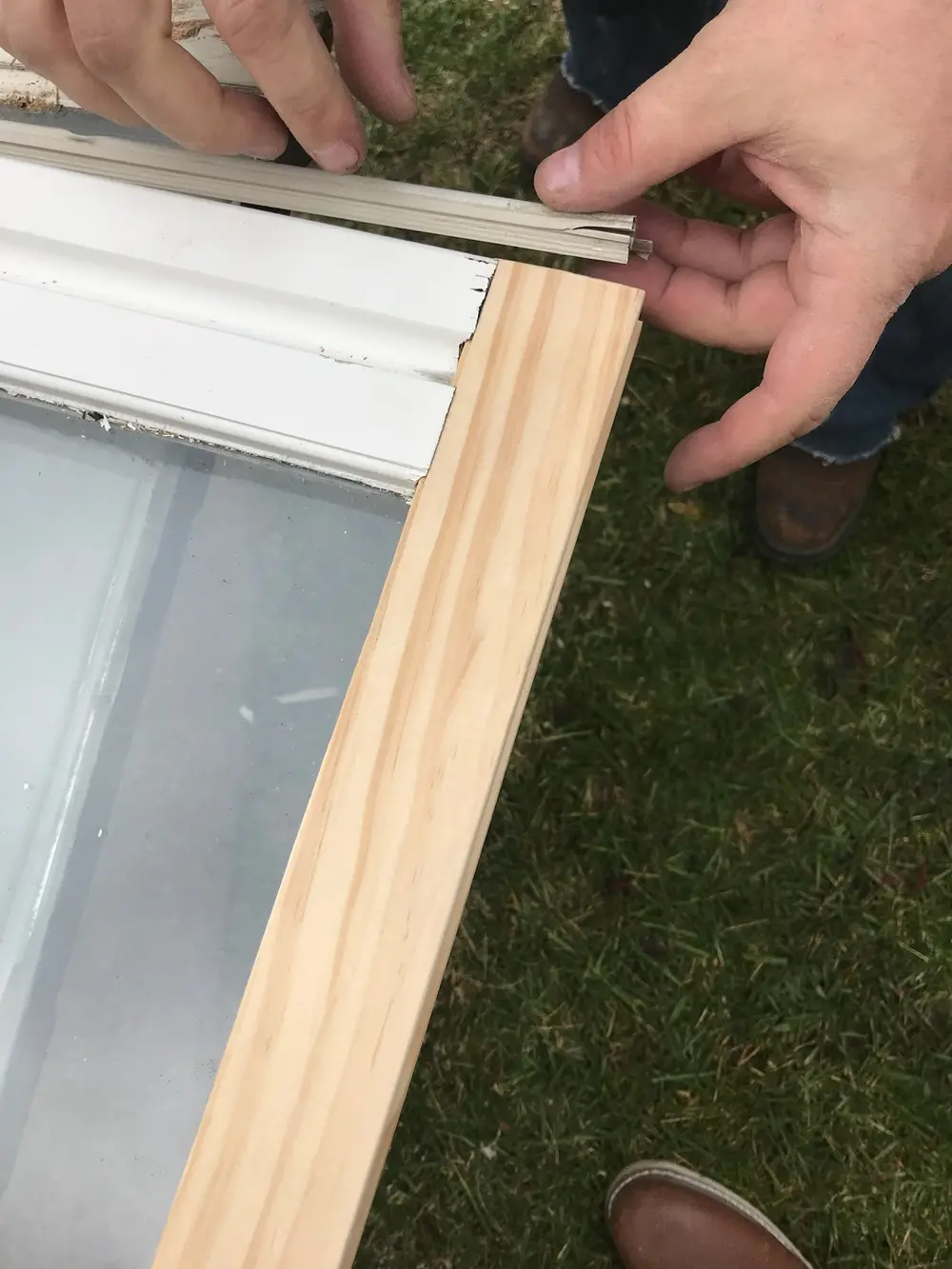
Weather stripping seals the gaps where the window opens and closes. It flattens, tears and hardens with age, and when it does, a closed and locked window can still leak. If the leak is between the sash and the frame or at the meeting rail, check the weather stripping first.
Weather stripping comes in many shapes, and the right one depends on the window. Some windows take a strip that slides into a groove, others use foam, pile or a bulb seal. Matching the old profile matters, because the wrong one can keep the window from closing or locking. If you are not sure what you have, weather stripping replacement is a small job for us.
Caulk for the joints that do not move
Caulk seals the fixed joints, such as where the window frame meets the siding or brick outside, and where the trim meets the wall inside. Michigan winters are hard on it. The joint opens and closes as the house warms and cools, and over the years caulk shrinks, cracks and lets go.
New caulk over old caulk rarely lasts. The old material has to come out, and the joint has to be clean and dry, for new caulk to stick. Exterior caulk also needs dry weather and temperatures the product allows, which is one more reason to do it in the fall. We handle caulking removal and replacement around windows when the joints are high, hard to reach or in rough shape.
When a draft is a bigger problem
Some drafts are signs that something needs repair:
- A window that will not lock, or a lock that does not line up, usually needs hardware or adjustment. Replacement parts are in the locks and keepers section of our shop.
- A sash that drops or will not stay closed may have worn balances.
- Soft or rotted wood around the sash or sill lets air and water in and will not hold caulk. See wood rot on window sills and sashes.
- Fog between the panes is a failed glass seal, not a draft. See foggy window glass.
- Cracked glass or loose glazing around old single-pane glass needs glass work.
Plastic window film and heavy curtains can help for a season, but they do not fix the leak. If you would rather have the problem found and fixed once, we can look at it.
Safety first
Work from the inside wherever you can. Caulking or weather stripping upstairs windows from a ladder is a job for someone with the right equipment. If the window is above the first floor, call a pro.
Get help before the cold sets in
We repair drafty windows for homeowners across Metro Detroit (Macomb, Oakland and Wayne Counties). Call (248) 250-8000 or request a free quote, and we will come out within 24 to 48 hours to find where the air is coming in and what it will take to stop it.
Common Questions
- What is the most common cause of drafty windows?
- Worn weather stripping between the sash and the frame, and cracked caulk around the outside of the frame, are common causes. A window that does not close or lock fully can also leak.
- Can I caulk windows in cold weather?
- It is harder. Caulk needs a clean, dry joint and temperatures within the range printed on the tube. That is why fall is the best time to recaulk.
- Should I caulk the moving parts of a window?
- No. Caulk is for joints that do not move. Gaps where the window opens and closes need weather stripping, or the window will be sealed shut.
- Is window film a good fix for drafts?
- It can cut the chill for a season, but it does not fix the leak. Weather stripping, caulk or a repair fixes the cause.
- Do you fix drafty windows?
- Yes. We replace weather stripping, remove and replace caulking, and repair the windows themselves. Call (248) 250-8000 or request a free quote.
Have a window that needs work?
Free, in-person quote in 24 to 48 hours.
Serving The Metro Detroit Area